
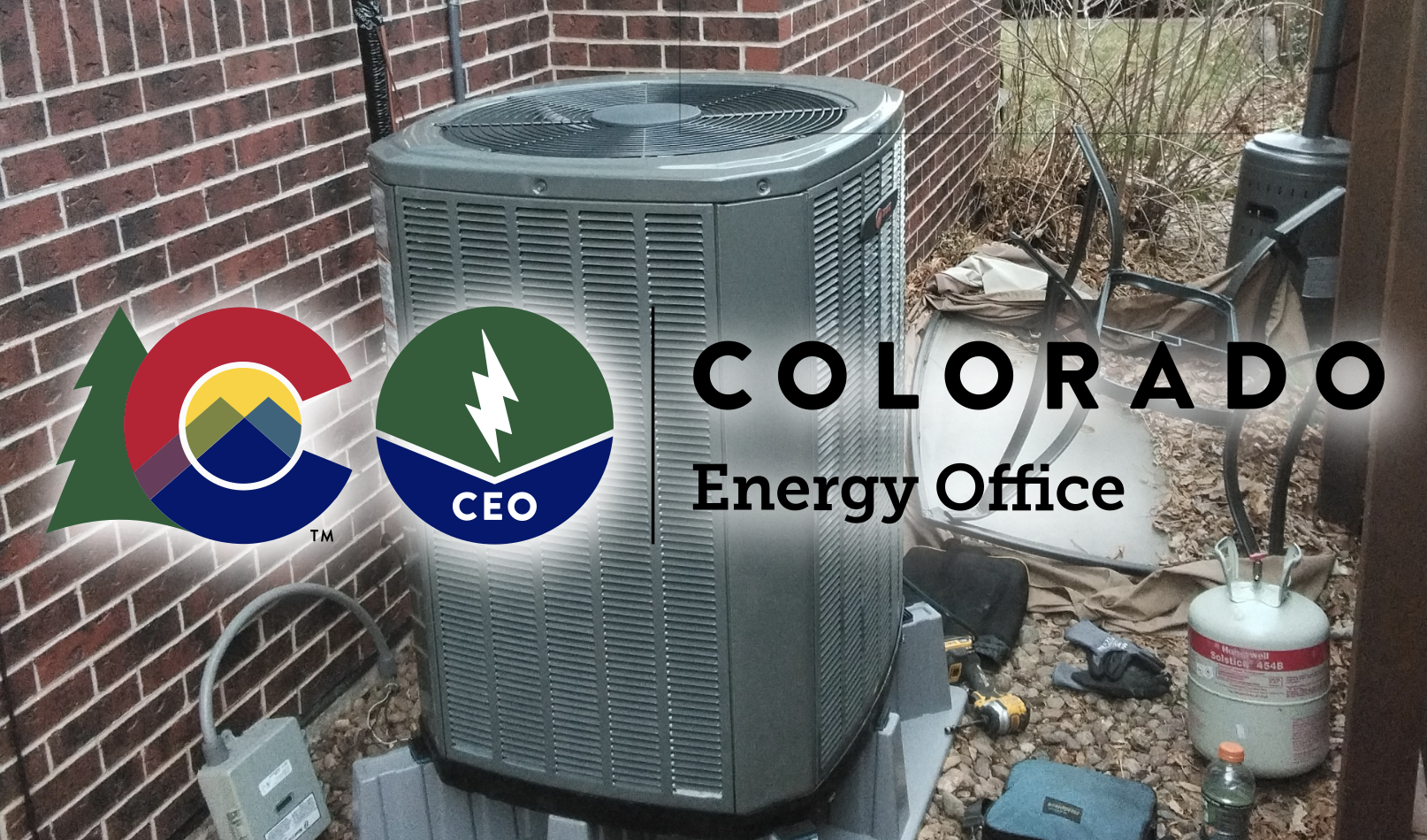
The HEAR program is a Colorado electrification incentive that helps qualifying households reduce the upfront cost of installing high efficiency electric equipment, including heat pumps.
Unlike most rebate programs, HEAR rebates are applied directly to the contractor invoice as an upfront discount rather than being paid to the homeowner after installation. To use the rebate, the homeowner or tenant must first apply and be approved through the HEAR program portal. The steps below explain how to get started.
Note: Heat pump rebates require all of the following.
- The new heat pump must be replacing heating equipment that uses natural gas, propane, wood, etc. Heat pumps can also replace electric resistance heating equipment. Homeowners cannot get the rebate if they are replacing a heat pump.
- Qualifying heat pump systems must provide 51% or more of the home’s heating load.
- Heat pumps must be Energy Star cold climate rated.
Step 1. Do You Qualify for the HEAR Rebate
HEAR eligibility and rebate amounts are based primarily on household income compared to the Area Median Income, often called AMI. The tables below are used together to determine whether you qualify and how much of a project may be covered.
Median income table for Boulder County
Use this table to find the Area Median Income (AMI) thresholds for your household size. Compare your household’s gross income to the 80 percent and 150 percent AMI limits shown. If the house is rented, only the tenant’s income is considered when applying for the HEAR rebate.
Median income tables for other counties can be found here.
| Household Size | 80% AMI | 150% AMI |
|---|---|---|
| 1 | $72,950 | $158,150 |
| 2 | $83,400 | $180,750 |
| 3 | $93,800 | $203,350 |
| 4 | $104,200 | $225,900 |
| 5 | $112,550 | $244,000 |
| 6 | $120,900 | $262,050 |
| 7 | $129,250 | $280,150 |
| 8 | $137,550 | $298,200 |
HEAR rebate limits
Once you know which income range you fall into, this table shows how much of a qualifying project may be covered under the HEAR program.
| Income Level | HEAR Rebate Limit | |
|---|---|---|
| Below 80% Median Income | 100% of qualified project cost, up to the HEAR maximum rebate amounts | |
| 81% to 150% Median Income | 50% of qualified project cost, up to the HEAR maximum rebate amounts |
HEAR maximum rebate amounts by upgrade
These are the current maximum rebate caps per household or unit. Actual rebate amounts depend on income level, project scope, and program approval.
| Eligible Upgrade | HEAR Maximum Rebate Per Household or Unit |
|---|---|
| Heat pump water heater | $1,750 |
| Cold climate heat pump for space heating and cooling | $8,000 |
| Heat pump for space heating and cooling | $3,000 |
| Electric stove, cooktop, range, or oven | $840 |
| Electric load service center (also known as electric panel) | $4,000 |
| Insulation, air sealing, and ventilation | $1,600 |
| Electric wiring | $2,500 |
| Total maximum rebate | $14,000 |
Step 2. Gather materials for the homeowner or tenant/renter application
Use these checklists to make sure you have everything you need before filling out the application.
Homeowners
If you are a homeowner, use this checklist to confirm you have everything you need to complete the application. This includes:
- Photo ID
- Proof you currently own the property
- Proof you currently live at the property (at least 50% of the year)
- Proof of household income
Tenants and Landlords
Rebates are applied as an upfront discount on the contractor invoice. In most rental situations, the landlord pays the invoice after the HEAR rebate has been applied, even though rebate eligibility is based on the tenant’s income. The tenant does not receive rebate funds directly, but must submit the application through the HEAR online portal.
The tenant/renter can use this checklist to confirm they have everything needed to complete the application. This includes:
- Photo ID
- Proof you currently rent the property
- Landlord authorization for participation
- Proof of household income
The tenant and landlord will also need to sign the Landlord Authorization for Participation Form
Step 3. Submit the application
Submissions can be made using the online portal.
Refer to this pdf for detailed instructions on submitting your HEAR profile application.
Household income eligibility applications should be processed within 3 business days. Approval and funding availability are determined by the HEAR program and may change based on available state funding and program rules.
Step 4. Plan the Installation
After submitting your HEAR application, the next step is to confirm the scope of work for your home. This typically includes reviewing equipment options, electrical capacity, and local permit requirements.
If you are ready to move forward or have questions about your options, we can help you plan the next steps.