As of January 1, 2026, Colorado began enforcing new air quality rules that affect which gas furnaces can be sold and installed in homes, often called the Colorado low-NOx furnace rules. These changes matter if you live in Boulder County and expect to replace your furnace in the coming years.
This guide explains what changed, why the rules exist, and what they mean for homeowners in practical terms. If your furnace is working fine, there is no urgent action required. If replacement is on the horizon, understanding the rules ahead of time helps you plan and avoid surprises.
What changed in 2026
Colorado passed legislation that limits nitrogen oxide emissions from new residential gas furnaces. Nitrogen oxides, often shortened to NOx, are a group of gases created during combustion. Along the Front Range, NOx contributes to ozone pollution, which is a persistent air quality issue. Many Front Range residents are familiar with the ozone haze that can build up over the Denver metro area during poor air quality days.
Starting January 1, 2026:
- New gas furnaces sold or installed in Colorado must meet an ultra-low NOx emission limit.
- Most older style and mid-efficiency furnaces no longer qualify.
- In practice, almost all compliant furnaces are high-efficiency condensing models.
The rule does not apply retroactively. It does not require homeowners to replace existing equipment. It only affects new installations and replacements starting in 2026.
Temporary availability of non-low NOx furnaces
There is an important short-term detail worth noting.
Some distributors in Colorado stockpiled standard 80 percent furnaces before the 2026 rule took effect. State regulators have allowed distributors to sell through existing inventory for a limited period rather than requiring immediate disposal.
This means that in early 2026, some non-low NOx furnaces may still be legally sold, depending on availability and local interpretation. However: • Inventory is limited and unpredictable. • Not all jurisdictions are treating sell-through inventory the same way. • These furnaces are not expected to remain available long-term.
For most homeowners, it still makes sense to plan around compliant ultra-low NOx equipment. Relying on leftover inventory is not a dependable strategy, especially for emergency replacements.
What the rule does not do
There has been some confusion around this law, especially online. A few important clarifications:
- It does not ban gas furnaces statewide.
- It does not force you to switch to electric heat.
- It does not require replacement of working equipment.
- It does not change how your existing furnace can be used or repaired.
If a contractor tells you that gas furnaces are illegal in all of Boulder County, that is incorrect. The rules are more specific than that.
Why this matters locally in Boulder County
Boulder County sits in a region with long heating seasons and recurring air quality challenges. Winter inversions and summer ozone alerts are common along the Front Range. State regulators targeted furnaces because residential heating is a large and steady source of NOx emissions during cold months.
From a homeowner perspective, the practical impact is that the “baseline” furnace available on the market is now a higher-efficiency, cleaner-burning unit. These furnaces generally:
- Use less natural gas per unit of heat.
- Vent through PVC instead of metal flues or chimneys.
- Include more advanced controls and safety features.
They cost more up front than older models, but they also waste less fuel over time.
Can you keep your current furnace?
Yes.
If your furnace was installed before 2026 and is operating safely, you can continue using it. There is no expiration date imposed by the state.
Repairs are still allowed. Normal maintenance, part replacement, and service work can continue as usual. The law only restricts the sale and installation of new non-compliant furnaces.
That said, if your furnace is 15 to 25 years old, it is reasonable to start planning for replacement. Waiting until a mid-winter breakdown limits your options and increases stress.
What happens when you do replace your furnace
When a furnace replacement happens after January 1, 2026:
- The new unit must meet the ultra-low NOx emission standard.
- The installer must pull a mechanical permit.
- Venting will almost always be updated to PVC.
- The installation will be inspected by the local jurisdiction.
Most manufacturers have already shifted their product lines, and non-compliant models are becoming harder to source.
Heating options that meet the new rules
Homeowners still have choices. The rules narrow the equipment list, but they do not force a single solution.
Ultra-low NOx gas furnaces
This is the most direct replacement for a traditional furnace.
What to expect:
- Efficiency ratings typically 95 percent or higher.
- PVC intake and exhaust venting.
- Sealed combustion that uses outside air.
- Higher equipment cost than older furnaces.
These systems work very well in cold weather and feel familiar to most homeowners. Ductwork usually stays the same, and gas service remains in place.
Electric heat pumps
Heat pumps use electricity to move heat rather than create it through combustion. Because they do not burn gas, they produce no on-site NOx emissions.
In Boulder County, cold-climate heat pumps are a viable option when properly designed.
Considerations include:
- Higher upfront cost in many cases.
- Possible electrical panel upgrades.
- Large utility rebates available through programs like Xcel Energy.
- One system provides both heating and cooling.
Many homeowners choose a dual-fuel setup, where a heat pump handles most heating and a gas furnace provides backup during extreme cold. This is still allowed in existing homes as long as the gas furnace meets the low-NOx standard.
Electric resistance systems
Straight electric furnaces or air handlers with electric heat strips are allowed but usually not recommended for whole-home heating due to operating cost. They are sometimes used as backup heat for heat pumps.
Venting changes you should expect
One of the most visible differences with new high-efficiency furnaces is venting.
Older furnaces used hot exhaust gases and metal flues or chimneys. New condensing furnaces extract more heat from the exhaust, which cools it enough to vent through plastic pipe.
Common changes include:
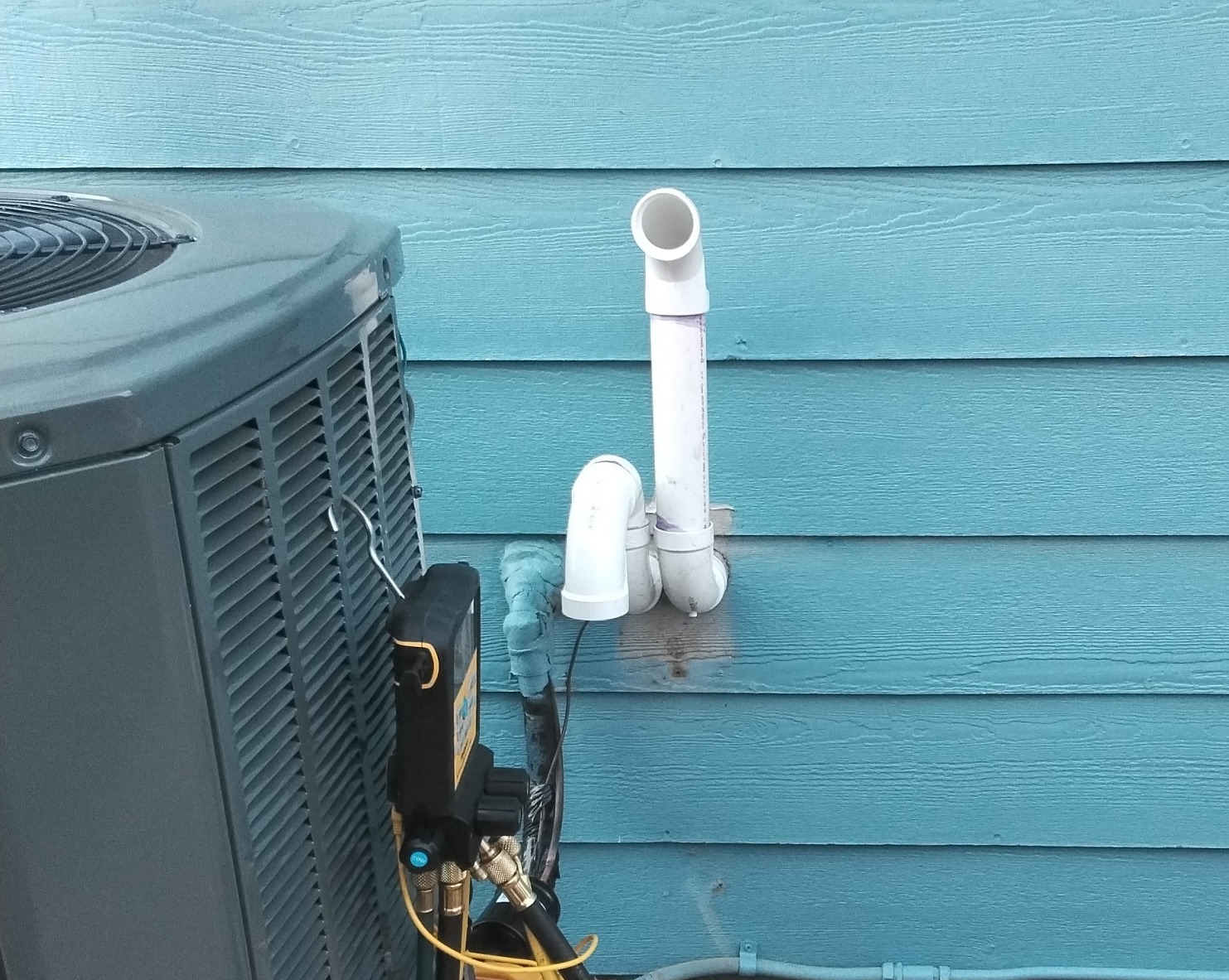
- One or two PVC pipes exiting through a side wall.
- A condensate drain line that removes water created during operation.
- Abandonment or resizing of an old chimney if the furnace previously used it.
If your water heater still vents into the chimney, the installer must address that. Chimneys that are too large for a single appliance can draft poorly and may need a liner or a different water heater configuration.
These details are part of a proper permit and inspection process.
How local codes differ by city
Some cities in Boulder County have additional energy or electrification policies.
For example:
- The City of Boulder restricts gas use in new construction and major additions.
- These rules do not force gas removal in existing homes.
- Like-for-like replacements are still allowed.
If you live outside Boulder city limits, rules are generally less restrictive, but all jurisdictions enforce the state low-NOx requirement.
When in doubt, give us a call and we can go through your city’s requirements.
Common misconceptions
A few things we hear often that are not quite right:
-
“Gas furnaces are banned.”
Not true for existing homes. -
“I need to replace my furnace before 2026.”
Not required if it is working safely. -
“Heat pumps do not work in Colorado.”
Modern cold-climate models work well when properly designed. -
“Permits are optional.”
They are required and protect you.
A practical next step
If your furnace is older, noisy, or unreliable, now is a good time to start planning rather than reacting. Understanding the low-NOx rules gives you more control over timing and cost.
If you are unsure what applies to your home or want to explore options, a conversation with our team at KJ Thomas Mechanical will clarify things quickly. No pressure is needed. Good decisions come from good information.